
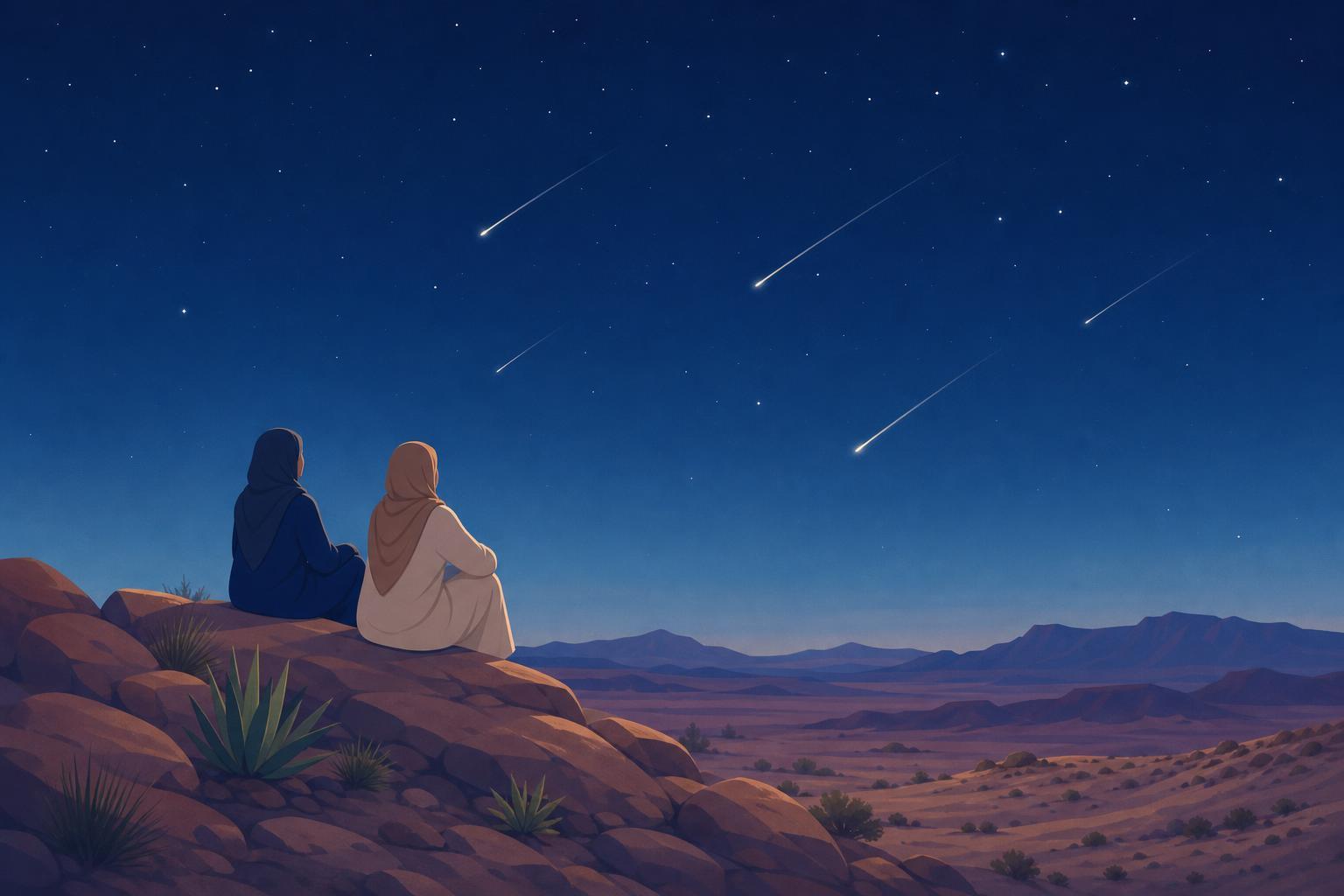
زَخَّةُ شُهُبِ الْبَرْشاَوِيّاتِ تَبْلُغُ ذِرْوَتَها لَيْلَةَ ١٢ أَغُسْطُسَ
Listen to the Article
This audio was generated using an AI voice.
تَبْلُغُ زَخَّةُ شُهُبِ الْبَرْشاَوِيّاتِ ذِرْوَةَ نَشاطِها لَيْلَةَ الْأَرْبِعاءِ ١٢ أَغُسْطُسَ وَصَباحَ الْخَمِيسِ ١٣ أَغُسْطُسَ ٢٠٢٦. وَيُمْكِنُ لِسُكّانِ بُلْدانٍ عَرَبِيَّةٍ كَثيرَةٍ مُشاهَدَةُ الشُّهُبِ إِذا كانَتِ السَّماءُ صافِيَةً.
وَهٰذِهِ السَّنَةُ مُناسِبَةٌ لِلرَّصْدِ؛ لِأَنَّ الْقَمَرَ يَكُونُ فِي مَرْحَلَةِ الْمِحاقِ فِي وَقْتِ الذِّرْوَةِ. لِذٰلِكَ، لَنْ يُنيرَ ضَوْؤُهُ السَّماءَ كَثيرًا، وَسَتَظْهَرُ الشُّهُبُ بِشَكْلٍ أَوْضَحَ. وَتَتَحَسَّنُ فُرَصُ الرُّؤْيَةِ فِي مَكانٍ مُظْلِمٍ بَعيدٍ عَنْ أَضْواءِ الْمُدُنِ.
تَحْدُثُ الْبَرْشاَوِيّاتُ عِنْدَما تَمُرُّ الْأَرْضُ بِسَحابَةٍ مِنَ الْجُسَيْماتِ الصَّغيرَةِ الَّتي تَرَكَها مُذَنَّبُ سْوِيفْت-تاتِلْ. وَتَدْخُلُ هٰذِهِ الْجُسَيْماتُ الْغِلافَ الْجَوِّيَّ بِسُرْعَةٍ كَبيرَةٍ، فَتَحْتَرِقُ وَتَظْهَرُ كَخُطوطٍ مُضيئَةٍ فِي السَّماءِ. وَلَيْسَتِ الشُّهُبُ نُجومًا تَسْقُطُ مِنَ السَّماءِ.
وَيَنْصَحُ الْفَلَكِيّونَ بِالنَّظَرِ إِلَى السَّماءِ بَعْدَ مُنْتَصَفِ اللَّيْلِ وَقَبْلَ الْفَجْرِ. وَلَا يَحْتاجُ الْمُشاهِدُ إِلَى تِلِسْكوبٍ أَوْ مِنْظارٍ، فَالْعَيْنانِ تَكْفِيانِ. وَمِنَ الْمُفيدِ إِعْطاءُ الْعَيْنَيْنِ نَحْوَ ثَلاثينَ دَقيقَةً لِلتَّعَوُّدِ عَلَى الظَّلامِ، مَعَ تَجَنُّبِ النَّظَرِ إِلَى الْهاتِفِ.
Show English Translation
Perseid Meteor Shower Peaks on the Night of August 12
The Perseid meteor shower will reach its peak on the night of Wednesday, August 12, and the morning of Thursday, August 13, 2026. Residents of many Arab countries may be able to watch the meteors if the sky is clear.
This year is suitable for observation because the Moon is in its new-moon phase at the time of the peak. Therefore, its light will not brighten the sky much, and the meteors will appear more clearly. Viewing chances improve in a dark place far from city lights.
The Perseids happen when Earth passes through a cloud of small particles left by Comet Swift–Tuttle. These particles enter the atmosphere at high speed, burn up, and appear as bright lines in the sky. Meteors are not stars falling from the sky.
Astronomers advise looking at the sky after midnight and before dawn. Viewers do not need a telescope or binoculars; their eyes are enough. It is useful to give the eyes about 30 minutes to adjust to the darkness and to avoid looking at a phone.
Key Vocabulary
| Arabic | Part of speech | English |
|---|---|---|
| زَخَّةُ شُهُبٍ | noun phrase | meteor shower |
| ذِرْوَةَ نَشاطٍ | noun phrase | peak activity |
| رَصْدٍ | noun | observation |
| الْمِحاقِ | noun | new moon |
| مُظْلِمٍ | adjective | dark |
| الْجُسَيْماتِ | noun | small particles |
| مُذَنَّبُ | noun | comet |
| الْغِلافَ الْجَوِّيَّ | noun phrase | atmosphere |
| تَحْتَرِقُ | verb | burn up |
| تِلِسْكوبٍ | noun | telescope |
| تَجَنُّبِ | noun | avoidance |
Sources
- Associated Press: How to spot the Perseid meteor shower, a summer light show that promises to dazzle
- Axios: Utah might miss the biggest stargazing night of 2026
This learner article is an original summary based on the sources above. The featured image is an AI-generated editorial illustration.