
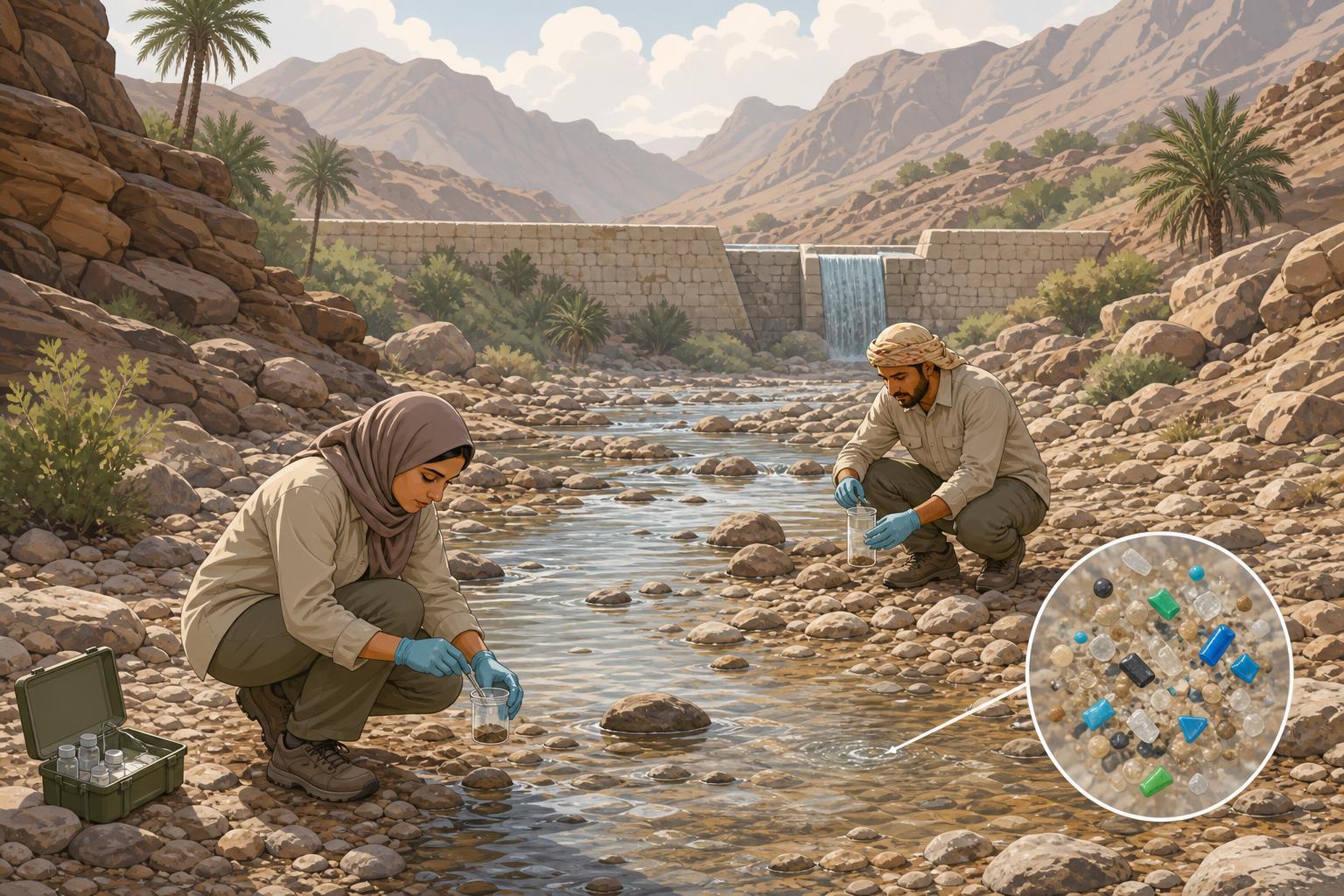
دِراسَةٌ عُمانِيَّةٌ تَكْشِفُ أَثَرَ السُّيولِ في تَلَوُّثِ وَادِي الْخَوْضِ بِالْبِلَاسْتِيكِ الدَّقيقِ
Listen to the Article
This audio was generated using an AI voice.
نَشَرَ باحِثونَ مِنْ جامِعَةِ السُّلْطانِ قابوسَ دِراسَةً جَديدَةً عَنْ تَلَوُّثِ وَادِي الْخَوْضِ بِالْبِلَاسْتِيكِ الدَّقيقِ في شَمالِ عُمانَ. وَصَدَرَتِ الدِّراسَةُ في مَجَلَّةٍ عِلْمِيَّةٍ مُحَكَّمَةٍ يَوْمَ ١٥ أَغُسْطُسَ ٢٠٢٦.
جَمَعَ الْفَريقُ عَيِّناتٍ مِنْ رَواسِبِ سَطْحِ الْوادي في أَحَدَ عَشَرَ مَوْقِعًا. وَكانَ ذٰلِكَ مَرَّةً في أُكْتوبَرَ ٢٠٢٣، وَمَرَّةً أُخْرى بَعْدَ سُيولٍ سَبَّبَتْها أَمْطارٌ غَزيرَةٌ في مارِسَ ٢٠٢٤. وَفَحَصَ الْباحِثونَ شَكْلَ الْجُزَيْئاتِ وَأَحْجامَها وَأَنْواعَ الْبِلَاسْتِيكِ فيها.
أَظْهَرَتِ النَّتائِجُ أَنَّ السُّيولَ زادَتْ كَمِّيَّةَ الْبِلَاسْتِيكِ الدَّقيقِ في مُعْظَمِ الْمَواقِعِ. وَكانَتِ الزِّيادَةُ أَكْبَرَ قُرْبَ سَدٍّ لِحَجْزِ مِياهِ السُّيولِ، حَيْثُ بَلَغَتْ نَحْوَ أَلْفٍ في الْمِائَةِ مُقارَنَةً بِما كانَ قَبْلَ السَّيْلِ.
وَوَجَدَ الْفَريقُ أَنَّ الْقِطَعَ الصَّغيرَةَ كانَتْ أَكْثَرَ شُيوعًا مِنَ الْأَلْيافِ. وَكانَ نَوْعا الْبِلَاسْتِيكِ، الْبُولِي بْرُوبِيلِينِ وَالْبُولِي إِيثِيلِينِ، مِنْ أَكْثَرِ الْأَنْواعِ وُجودًا. وَتُبَيِّنُ النَّتائِجُ أَنَّ السُّيولَ قَدْ تَجْمَعُ هٰذِهِ الْجُزَيْئاتِ في بَعْضِ أَجْزاءِ الْوادي.
Show English Translation
Omani Study Finds Floods Raise Microplastics in Wadi Al Khoud
Researchers from Sultan Qaboos University published a new study on microplastic pollution in Wadi Al Khoud in northern Oman. The peer-reviewed study was published on August 15, 2026.
The team collected samples of surface sediment at 11 locations. It did this once in October 2023 and again after floods caused by heavy rain in March 2024. The researchers examined the particles’ shapes, sizes, and plastic types.
The results showed that flooding increased the amount of microplastics at most locations. The largest increase was near a dam that retains floodwater, where it reached about 1,000 percent compared with the level before the flood.
The team found that small fragments were more common than fibres. Polypropylene and polyethylene were among the most common plastic types. The findings show that floods can collect these particles in some parts of the wadi.
Key Vocabulary
| Arabic | Part of speech | English |
|---|---|---|
| تَلَوُّثٌ | noun | pollution |
| الْبِلَاسْتِيكُ الدَّقيقُ | noun phrase | microplastics |
| رَواسِبُ | noun | sediments |
| عَيِّناتٌ | noun | samples |
| سُيولٌ | noun | floodwaters |
| جُزَيْئاتٌ | noun | particles |
| زِيادَةٌ | noun | increase |
| سَدٌّ | noun | dam |
| أَلْيافٌ | noun | fibres |
| يَجْمَعُ | verb | collects |
Sources
- Sultan Qaboos University House of Expertise: Distinctive factors driving microplastic distribution in arid zone ecosystems
- ScienceDirect / Science of the Total Environment: Distinctive factors driving microplastic distribution in arid zone ecosystems
This learner article is an original summary based on the sources above. The featured image is an AI-generated editorial illustration.